SE Ranking vs Mangools vs Semrush (2026): which SEO tool fits your budget, team and niche?

Disclosure: some links in this guide are affiliate links. If you sign up through them, I may earn a commission at no extra cost to you. How this site makes money.
All three tools answer the same questions: what people search for, who ranks, why they rank, and whether you're moving up. They differ in how much data they hold, how many people can use one account, and what you pay per tracked keyword. The right choice depends less on features than on your budget and how competitive your niche is.
Prices and limits come from each vendor's pricing page as checked on October 18, 2026. Mangools' plan table wasn't readable in our check, so its prices are cross-checked from several third-party listings and marked as approximate. No tool's search volumes are "true": they're all models. Section 5 shows you how to test which one is closest for your own site in about 20 minutes.
Quick comparison
| Tool | Best for | Entry price (monthly billing) | Team tier | Rank tracking | Trial / free option |
|---|---|---|---|---|---|
 Mangools Mangools | Bloggers, affiliate sites, beginners | About $29/month (Entry), approximate | Agency tier with more seats and lookups | SERPWatcher, daily updates | Free trial or limited free account; 48-hour refund window |
 SE Ranking SE Ranking | Small teams, freelancers, agencies on a budget | $129/month (Core), $103.20 billed annually | Growth: $279/month, 3 seats, 30 projects | Daily, 2,000 keywords on Core, 5,000 on Growth | 14-day trial, no card required |
 Semrush Semrush | Competitive niches, PPC + SEO teams, larger agencies | $139/month (SEO plan), $117.33 billed annually | Pro+: $299/month, 15 projects; extra users from $45/month | Daily, 500 keywords on SEO plan, 1,500 on Pro+ | 7-day trial; free account with 10 reports per day |
1. Mangools: the easiest way to find low-competition keywords
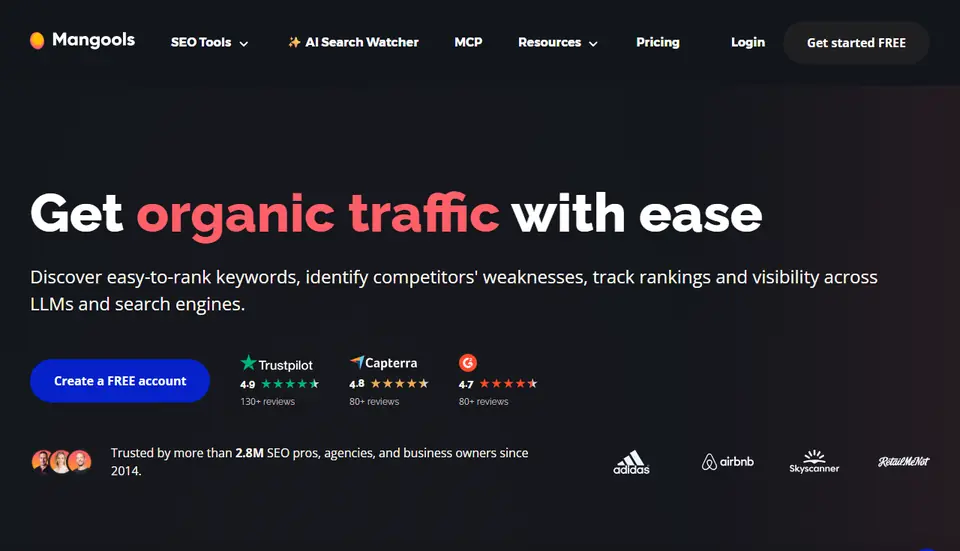
Mangools is five focused tools under one login: KWFinder for keyword research, SERPChecker for analyzing the results page, SERPWatcher for rank tracking, LinkMiner for backlinks and SiteProfiler for domain overviews. It recently added AI Search Watcher, which tracks whether your brand appears in AI answers. The interface is the cleanest of the three, and the keyword difficulty score is easy to act on for a new site.
Good at
- Finding long-tail keywords that a new or low-authority site can realistically rank for
- Local keyword data by city or region
- Very low learning curve; useful in the first session
- Pays by PayPal, card, bank transfer or crypto
Watch out for
- Daily lookup limits on lower plans run out quickly during research sprints
- Thinner competitor and backlink data than Semrush
- No technical site audit to match SE Ranking or Semrush
- Refunds only within 48 hours of payment
2. SE Ranking: the most complete toolkit per dollar for small teams
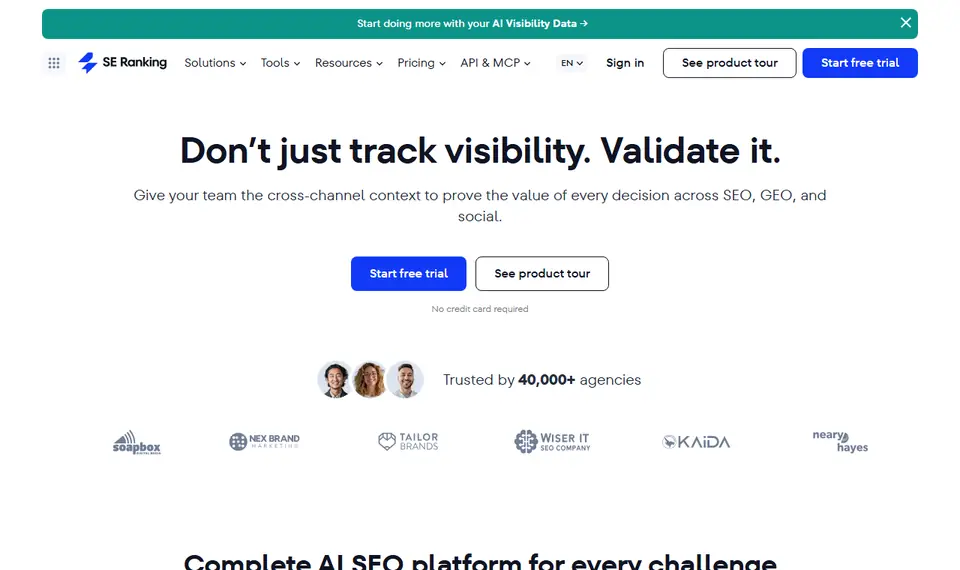
SE Ranking covers keyword research, competitor research, backlinks, site audits, daily rank tracking and AI search visibility in one account. Its 2026 plans start at $129 per month for Core (1 seat, 10 projects, 2,000 daily tracked keywords, 250,000 audited pages per month). Growth costs $279 per month and adds 3 seats, 30 projects, 5,000 keywords and all-time historical data. For agencies, the Agency Pack add-on (+$69 per month, annual billing only) adds 30 client seats, white-label reports and a lead generator.
Good at
- High tracked-keyword limits for the price, updated daily
- Client reporting and white-label dashboards via the Agency Pack
- Seats included in each plan rather than billed per user
- A real 14-day trial without a credit card
Watch out for
- Smaller keyword and backlink databases than Semrush, most noticeable outside the US and for low-volume terms
- Useful extras are add-ons: AI Search (+$89/month), API, Agency Pack
- 2026 entry pricing is much higher than the old Essential plan, so older reviews understate cost
3. Semrush: the deepest data for competitive niches
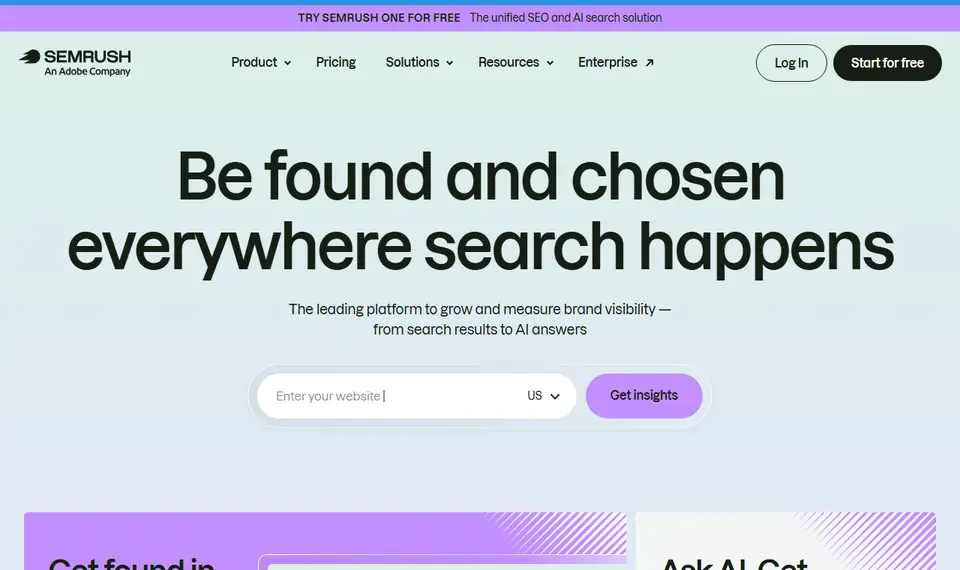
Semrush is the broadest suite here: keyword and competitor research, backlink analytics, site audits, position tracking, PPC and advertising research, content tools and AI visibility tracking. In 2026 the SEO plans are sold as SEO ($139/month, 5 projects, 500 tracked keywords), Starter ($199), Pro+ ($299, 15 projects, 1,500 keywords) and Advanced (custom, 5,000+ keywords). Older articles call the tiers Pro, Guru and Business.
Good at
- The most detailed competitor research: top pages, keyword gaps, backlink gaps, paid ads
- Combined SEO and PPC data for teams that run Google Ads too
- A large integration ecosystem and widely used traffic estimates that clients recognize
- Free account with 10 reports per day for occasional checks
Watch out for
- The most expensive per tracked keyword by a wide margin
- Extra users cost from $45 per month each, which adds up for teams
- So many tools that new users often pay for features they never open
4. Which one for your situation
| You are… | Pick | Why |
|---|---|---|
| A new blog or affiliate site, one person | Mangools | Cheapest way to find winnable keywords; you don't need 2,000 tracked keywords yet |
| A freelancer or small business with 3–10 sites | SE Ranking Core | Daily tracking, audits and backlinks in one plan at a price clients accept |
| An agency with client reporting needs | SE Ranking Growth + Agency Pack | Client seats and white-label reports without per-user fees |
| In a competitive niche (finance, SaaS, legal, insurance) | Semrush | Deeper keyword and backlink coverage shows gaps the cheaper tools miss |
| Running SEO and Google Ads together | Semrush | Paid search research and SEO data in one place |
5. Test data accuracy on your own site in 20 minutes
Search volume, difficulty and traffic estimates are modeled from clickstream panels and ad data. Accuracy varies by country, language and niche. Use the free trials and compare each tool against your own Google Search Console data:
- In Search Console, export 20 queries where you have at least 100 impressions in the last 28 days, with their average position.
- Look up the same 20 queries in each tool. Record the tool's volume and your ranking position as the tool reports it.
- Compare ranking positions first. A tool that reports positions close to Search Console's average is reading the results page correctly.
- Then compare relative volume. Exact numbers will differ, but the order (which keyword is bigger) should mostly match your impressions.
- Check your top three competitors in each tool. If one tool shows almost no keywords for a competitor you know is strong, its database is thin in your niche.
For small sites, the most valuable report in all three tools is a keyword gap: terms your competitors rank for on page 1 that you don't rank for at all, filtered to low difficulty. Agencies get more from tracking and reporting at scale, which is where SE Ranking's per-seat economics and Semrush's data depth pull apart.
6. Cost control
- Buy monthly first, annual later. Annual billing saves about 17–20%, but only once you know you'll keep the tool.
- Track fewer keywords, better chosen. Track the terms that drive revenue, not every variant. Most sites need a few hundred, not thousands.
- Use Search Console for your own data. It's free and exact for your site. Pay tools for competitor data and discovery.
- Count users before choosing Semrush. Four extra users at $45 or more each can cost more than the plan itself.
Mangools for one person finding keywords on a budget. SE Ranking for small teams and agencies that need tracking, audits and client reports at a sensible price. Semrush when competitor and advertising depth decides whether you win. Run the 20-minute accuracy test during the trials, and let your own Search Console data make the final call.
Tools mentioned in this guide · affiliate links
Founder of StealthScale.io and e-commerce infrastructure engineer writing field-tested playbooks on proxies, cloud VPS, anti-detect browsers and SEO.